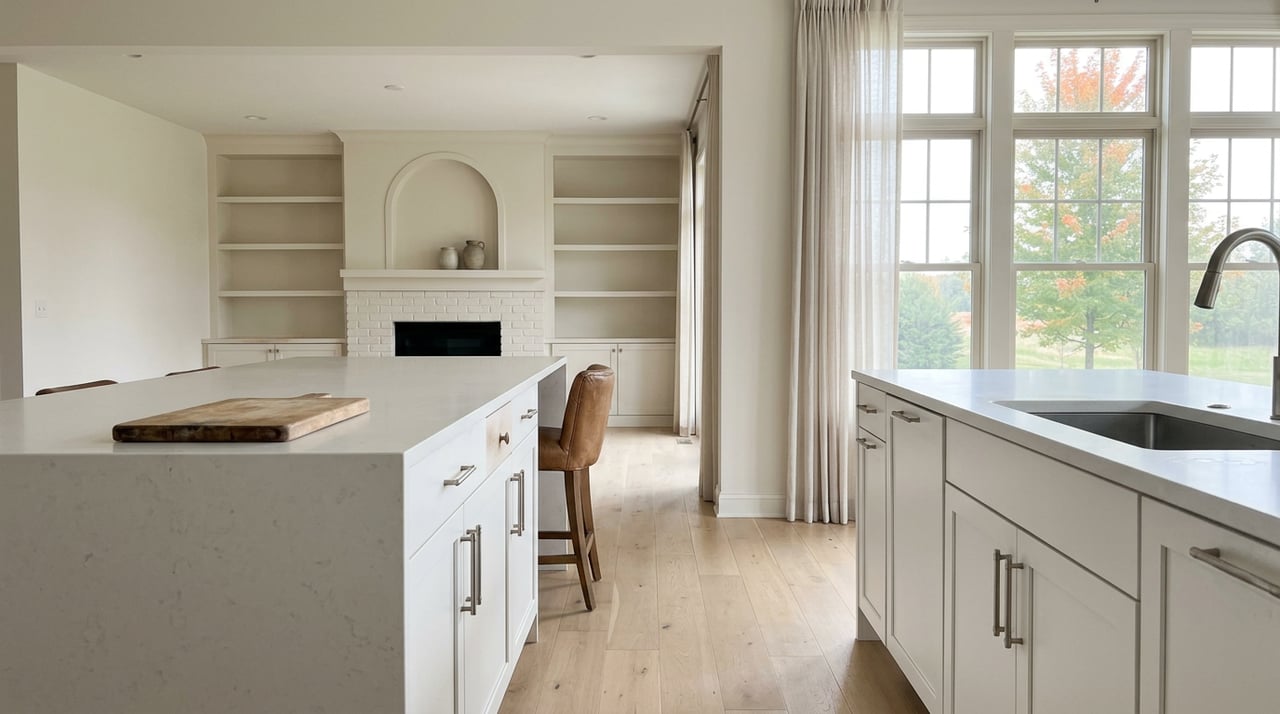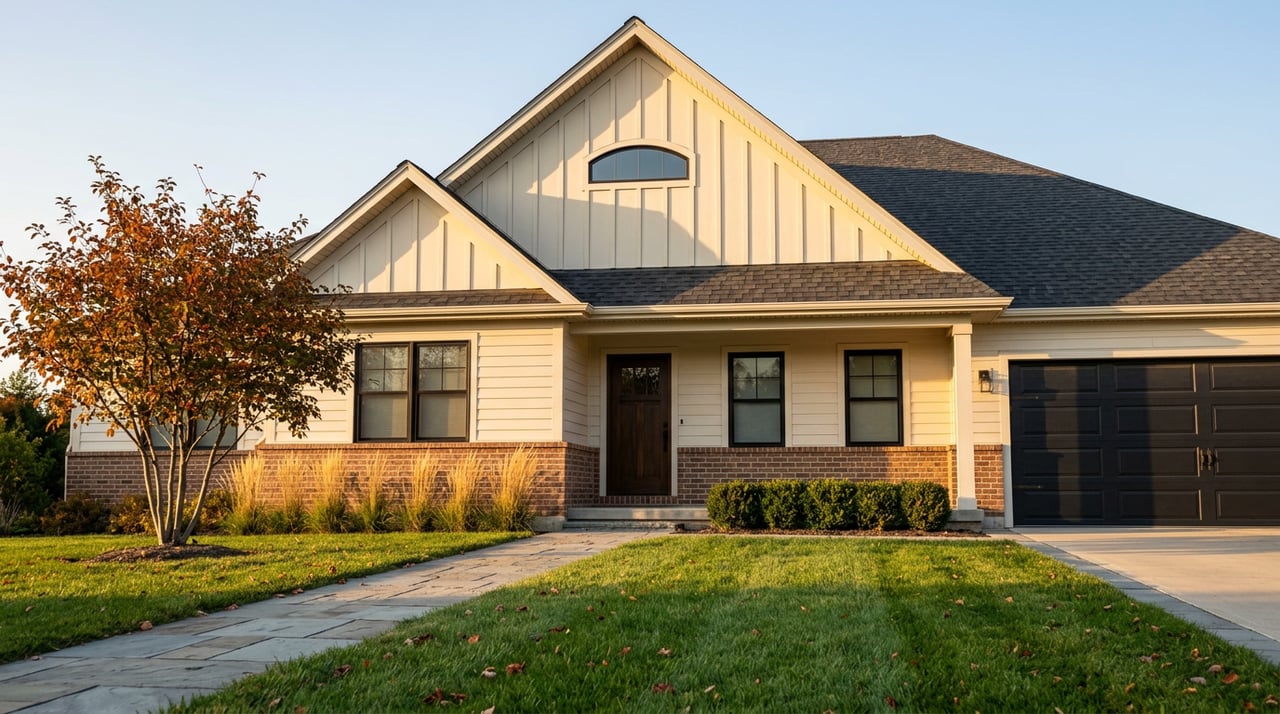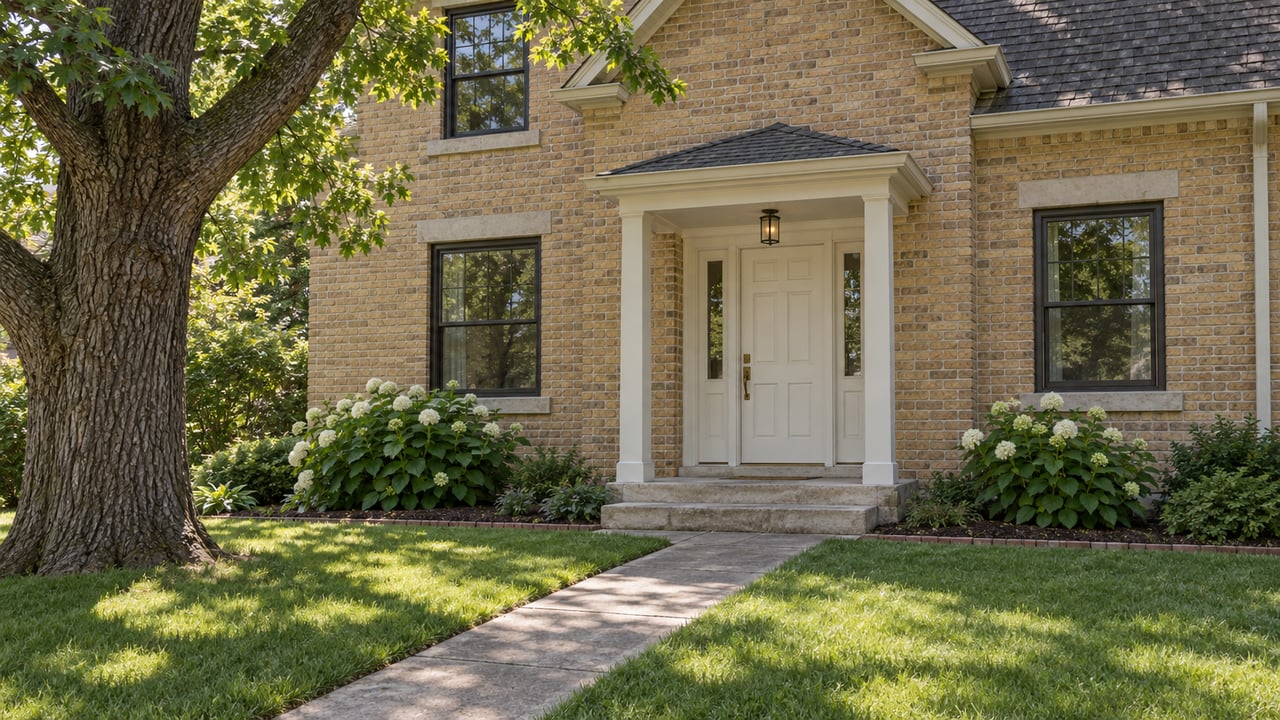
Two listings went up on Sheridan Boulevard and its side streets within a few weeks of each other this year. One, a 2,726 square foot home on Sheridan Blvd itself, had been taken down to the studs. New quartz kitchen, heated floors in the office, a completely rebuilt bathroom layout, priced at $715,000. A few blocks over on Bradfield Drive, a 1.5 story Tudor went on the market with a different pitch entirely. The listing pointed to cherry colored wood floors that had been sitting untouched under carpet for more than fifty years and encouraged buyers to skip the renovation and just move in, wallpaper and all.
Same historic district. Same protected status on the National Register of Historic Places. Completely different bets on what a house in this neighborhood is supposed to look like.
If you're touring Country Club or comparing it to other close-in Lincoln neighborhoods, that gap is worth understanding before it's worth explaining away. It isn't random, and it isn't really about the historic designation at all.
What the National Register Actually Controls
The Boulevards Historic District, which covers Sheridan Boulevard and the surrounding Country Club neighborhood, was added to the National Register in 2008. The district runs roughly from South Street north to Calvert and High Streets, bounded by S. 22nd and S. 24th Streets on one side and the Rock Island Trail and Sheridan Boulevard on the other. It's one of eleven historic districts in Lancaster County, and it covers homes built after Sheridan Boulevard broke from Lincoln's grid pattern in the early 1900s, the first Lincoln street to do that.
Here's the part that surprises a lot of buyers. The Nebraska State Historical Society, which administers the National Register in this state, is direct about what the listing does and doesn't do: "The National Register does not place any restrictions on property owners." No requirement to keep original windows. No review board that has to approve your kitchen remodel. No rule against ripping out plaster and running new electrical. The honor is real. The oversight most people assume comes with it isn't.
That single fact is why you can stand on Sheridan Boulevard and see a fully gut-renovated Tudor next to a home where the current owner has left the wood floors buried under carpet since before most of us were born. Nobody is enforcing a look here. Every owner is making an individual call about how much of the original house to keep.
The One Process That Actually Does Slow You Down
There is a local layer that sits on top of the federal designation, and it catches some buyers off guard for a different reason. Lincoln has been a Certified Local Government for historic preservation since 1984, which means the city's Historic Preservation Commission does review certain changes within districts like this one, but the trigger is narrower than most people expect. It isn't renovation. It's additions that push an already non-conforming yard or setback even further out of line with the zoning code.
In one year the Commission's public annual report breaks out in detail, it reviewed three special permits in the Boulevards Historic District, all for house expansions on lots where the yard or setback was already non-conforming. The Commission's job in those cases wasn't to block the addition. It was to check whether the design fit the character of the block before signing off. That's a meaningfully different animal than a preservation board that vets paint colors or kitchen finishes. If you're planning a full remodel that stays within your existing footprint, you're very likely not walking into that review at all. If you're planning to build out toward a property line that's already tighter than code allows, budget time for it.
Same Boulevard, Two Different Bets
Once you know the district isn't enforcing uniformity, the price spread across these blocks starts to make sense as data rather than noise. Comparable sales near Sheridan Boulevard have closed anywhere from $270,000 to $925,000, averaging around $170 a square foot, all within the same historic boundary and the same short walk to the Rock Island Trail. One listing near Sheridan itemized exactly what a partial update costs in a home like this: about $64,000, with more than $12,000 of that going into electrical work and buried power lines alone, before you even touch cosmetics.
That's the real lesson in the median. Country Club's homes were listing at a median of $398,000 in July 2026, at roughly $167 a square foot, moving in a median of 29 days. A single number like that flattens two very different products into one line. A home that's had its systems and finishes redone start to finish is competing in a different tier than a home selling on original woodwork and character, even when they sit three doors apart and share a founding year of 1903. Neither is the wrong way to buy here. But treating the historic tag as a proxy for condition will get you a surprise at inspection.
The Friction That's Real, Just Not Legal
None of this means Country Club is a free-for-all. In 2022, a home near 27th and Sheridan Boulevard, in the Woodcrest area of the neighborhood, became the center of a public dispute that shows where the actual resistance to change comes from. The property, over a century old and sitting on 1.1 acres, had originally belonged to the son of the founder of Miller and Paine department stores. New owners bought it for $1.4 million in late September and announced plans to demolish it. The Preservation Association of Lincoln organized a rally outside the house before the scheduled demolition, and the story drew local news coverage and public debate over what should happen to a house with that kind of history.
Nothing in that dispute involved a zoning violation or a denied permit. The house wasn't legally protected from demolition. What played out instead was a public conversation. Neighbors and the Preservation Association of Lincoln spoke up about the home's history, and the owners explained that they were working with experts on a new house meant to fit the character of the neighborhood. That's the version of friction to expect if you're buying a teardown lot or planning a dramatic exterior change on a street with older homes. It won't show up as a stop-work order. It can show up as public attention and community conversation about what happens to a house with local history.
What This Means When You're Pricing or Touring Here
If you're comparing Country Club to other Lincoln neighborhoods, price the house in front of you, not the district around it. A "historic district" line in a listing description tells you almost nothing about whether the plumbing has been touched since 1955. Ask directly what's been updated and what hasn't, and expect that answer to explain more of the price than the street name does.
If you're planning work that stays inside your existing walls, the historic designation by itself won't slow you down. If you're planning an addition on a lot where the yard or setback is already tight, build in time for a special permit review by the Historic Preservation Commission, and expect that review to focus on fit with the block rather than blocking the project outright.
And if you're weighing a full teardown on an older lot, know that the real resistance you'd face isn't a legal one. It's a community one, and on a street like Sheridan Boulevard, it can be just as visible.
FAQ
Does buying a home in the Boulevards Historic District mean I need city approval to remodel? No. National Register listing carries no legal restrictions on what an owner does inside their home. Most cosmetic and system updates, kitchens, bathrooms, electrical, plumbing, don't trigger any review at all.
What actually requires a special permit from Lincoln's Historic Preservation Commission? Additions that would make an already non-conforming yard or setback even less conforming with current zoning. The Commission has reviewed cases like this in the district before, focused on whether the addition's design fits the block, not on stopping the project.
Why do homes near Sheridan Boulevard vary so much in price per square foot? Because the historic district doesn't standardize condition, owners do. Comparable sales near Sheridan Boulevard have ranged from roughly $270,000 to $925,000, and that spread tracks renovation status and system updates more than it tracks location within the district.
If you're trying to figure out which side of that gap a specific Country Club listing falls on, or whether a lot near Sheridan Boulevard can support the addition you have in mind, that's exactly the kind of block-by-block read Selling Sisters can walk through with you. Schedule a consultation before you tour, and you'll know what questions to ask at the door.